
Through-hole (THT) lines rarely fail on the big machines. They fail quietly at the insertion bench, where operators hand-feed radial taped components one lead at a time. If you have ever timed a radial insertion station, you know the bottleneck is human hands, not the board. This article puts a real number on that gap — 33 components into one PCB in 16 seconds, the cycle captured on our S3010A demo — and walks through a staffing-cost audit you can run with your own labour rates, without guessing.
The 16-second benchmark, and what it actually tells you
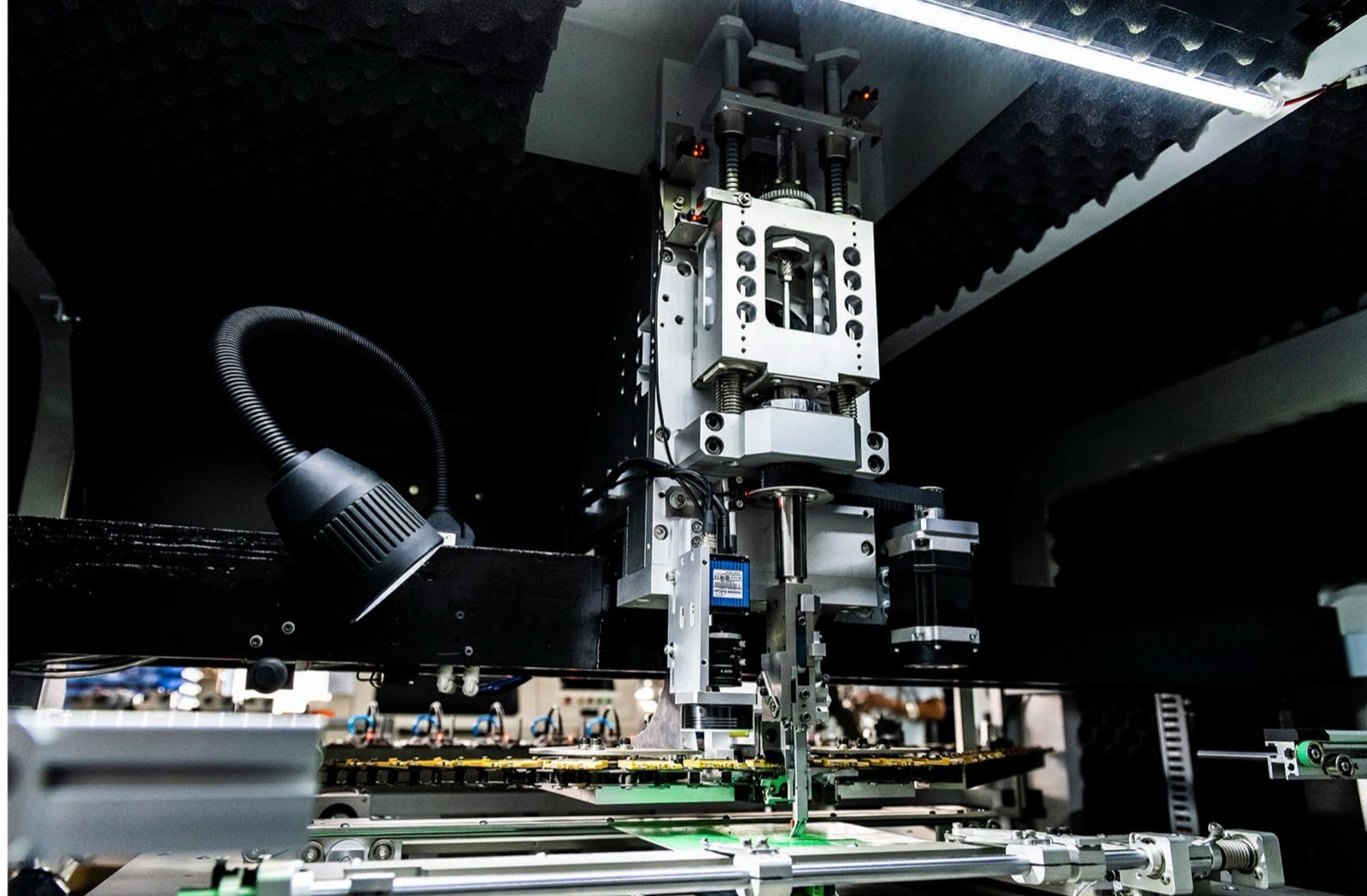
In the video below, a single S3010A radial insertion machine places 33 components onto one PCB in 16 seconds. That figure is taken directly from the machine demonstration title, so treat it as a measured sample, not a marketing average.
Extrapolate that exact cycle forward and it works out to roughly 7,400 component insertions per hour if the demo ran continuously with no changeovers. Real throughput is lower once you subtract feeder reloads, board swaps and rejects — but the point stands: one automated head clears a stack of components in the time a person finishes a handful. The correct takeaway is not the headline number, it is the ratio between a repeatable machine cycle and a variable human one.
Manual insertion vs a radial inserter: run your own staffing audit
We deliberately keep no invented wage or ROI figures here — those only make sense against your line. Instead, plug your own numbers into this four-step audit:
- Count the radial taped components per board that are currently inserted by hand (the S3010A handles taped radial leads on a reel).
- Time one operator's real cycle over, say, 20 boards, and derive components-per-hour-per-person (subtract their breaks and handling).
- Divide board output by station capacity to get the number of manual insertion heads you staff today, then multiply by loaded hourly cost (wage + benefits + supervision).
- Compare against one machine cycle. Where a person must reach, orient, insert and trim, the S3010A does it in one 16-second pass per 33 parts. The labour you free is what pays for the automation — not a spreadsheet assumption.
If you would like the fill-in-the-blanks spreadsheet version of this audit, request it from our team and we will tailor it to your board mix.
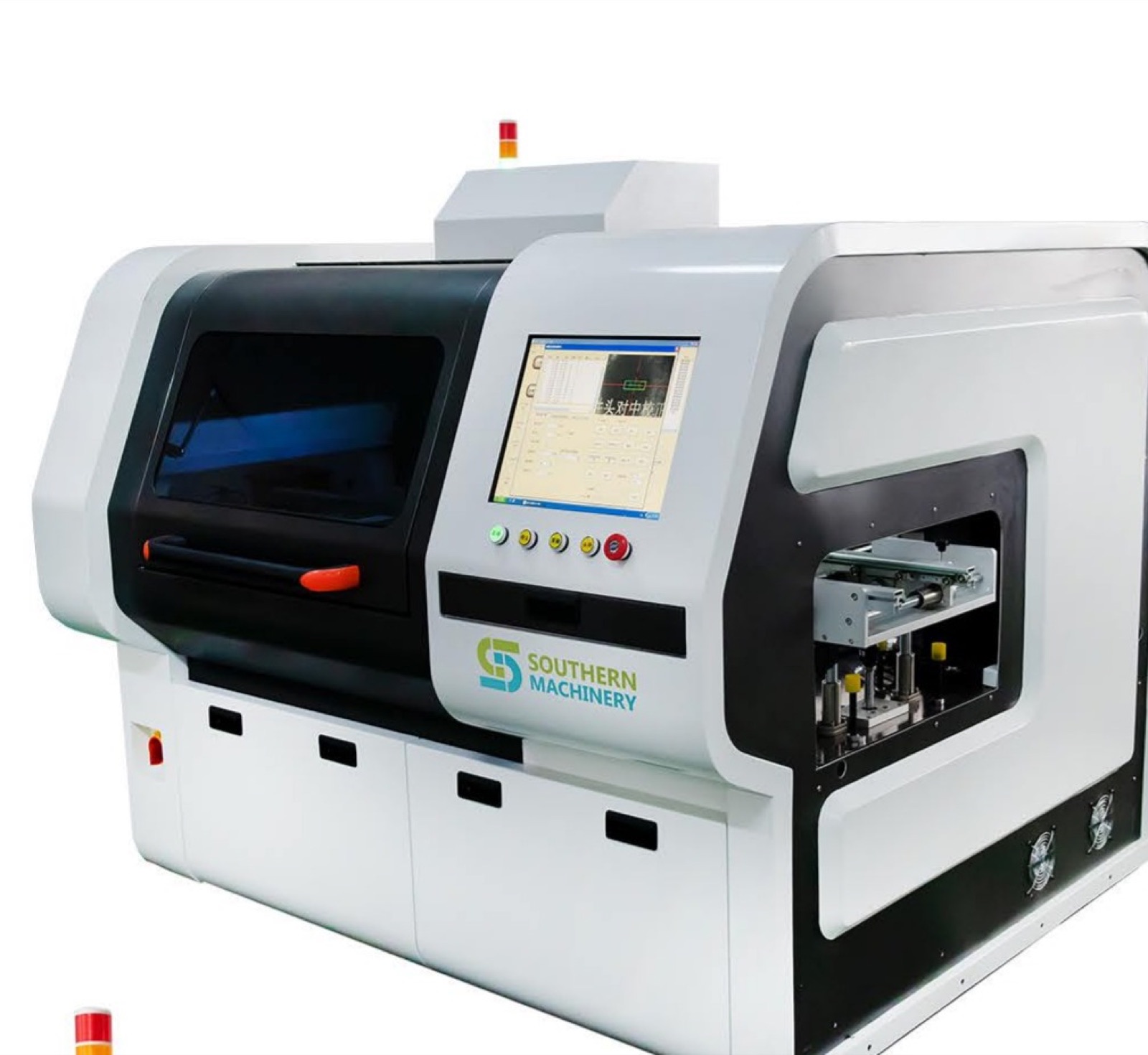
Where the real saving hides: the automation line, not just the head
A fast insertion head still starves if someone has to hand boards to it. Our S3010A Automation Solution removes that touch time end-to-end:
- Front loader + magazine rack — the rack holds up to 50 boards; the loader feeds each board automatically into the S3010A, with the conveyor height matched and the width adjustable. When the rack empties, it exits automatically for the operator to reload.
- Rear unloader — every finished board drops automatically into an empty rack; at 50 boards the rack indexes out and a worker moves it to the next process.
The practical effect on staffing is the one that matters: instead of a person inserting all day, one operator supervises load/unload across the rack cycle. That is where headcount shifts, not in the seconds-per-insert alone.
Be honest about the fit
A radial inserter wins on taped radial leads run in volume. It is the wrong tool for one-off odd-form parts, loose (bulk) components that first need taping, or transformers and relays handled by other stations. If your bottleneck is manual transformer and relay insertion, evaluate that separately. Automation pays when the same radial part repeats across many boards.
S3000 series reference (a related radial platform)
The S3010A sits in the same radial family as our S3000 automatic radial component insertion machine. From the S3000 2024 datasheet, for context only (verify against your own machine's spec sheet): 20,000 CPH rated / 10,000 CPH actual top speed, a servo-motor + lead-screw build inserting up to 12,000 CPH, max lead diameter 0.7 mm, lead trimming 1.5 ± 0.3 mm (short blade) / 2.0 ± 0.3 mm (long blade), and air source 0.6–0.8 MPa. These numbers describe the S3000 datasheet and are listed here as family reference — they are not a substitute for the S3010A configuration you quote.
To see the machine set up and maintained correctly, our S3010A operation manual covers feeder loading, insertion-head adjustment and routine care.
After-sales that keeps the audit honest
Downtime is the hidden labour cost, so support terms belong in your payback math. Every S3010A ships with worldwide support, free installation and training, a 1-day lead-time on spare parts, and a 1-month customisation window for your solution — so the machine you audit on paper is the machine you can actually keep running.
Want the staffing audit sized to your boards? Send your component mix and current insertion headcount to jack@smthelp.com or visit www.smthelp.com, and we will map your manual radial stations to an automated line.