
Wave soldering is fast and reliable, but it leaves behind flux residue, solder balls and other organic or inorganic contamination on the underside of the board. Whether that residue is acceptable depends on your reliability target, your flux chemistry and what sits downstream of the soldering machine. This guide explains what is actually left on a PCBA after wave soldering, when cleaning is required, and how an in-line aqueous cleaning process removes it.
What is left on a PCBA after wave soldering
After a wave solder pass, the board typically carries a mix of the following, all of which a proper PCBA cleaner is designed to remove:
- Rosin flux residue from rosin-based (R / RMA) fluxes.
- No-clean flux residue — the "no-clean" label means it is low-corrosion, not that it is invisible or free of residue.
- Water-soluble flux residue, which is the most aggressive and almost always demands removal.
- Solder balls and other organic and inorganic pollutants deposited during the solder wave.
When cleaning after wave soldering is required
Some consumer assemblies tolerate no-clean residue. Cleaning becomes a requirement, not an option, when the board goes into a high-reliability or harsh-environment product. Typical drivers include:
- Automotive / car electronics PCBA
- Military and aerospace PCBA
- Telecom PCBA
- Medical device PCBA
- Digital meter PCBA
- Boards headed for conformal coating, where trapped residue ruins adhesion
- Boards with bottom-terminated or fine-pitch components where residue is trapped under the part
As a rule of thumb: the more critical the function and the harsher the operating environment, the less you should rely on "no-clean" and the more you should specify a defined cleaning step after wave soldering.
How an in-line aqueous cleaning process works
A modern PCBA cleaning machine runs a continuous, in-line sequence in a single pass. A representative flow is: pre-wash → wash → liquid isolation → pre-rinse → rinse → final rinse → air blow dry → hot air dry → send out. The wash stage uses a water-based cleaning liquid, the rinse stage uses de-ionised (DI) water so no minerals are left on the board, and the dry stage uses hot air rather than a vacuum oven.
Two parameters matter most for a repeatable result:
- DI water resistivity — a high value (up to 18 MΩ) means the rinse water is pure enough not to leave ionic residue behind.
- Process temperatures — heated wash liquid, heated DI rinse and hot-air drying together break down rosin and no-clean residues that room-temperature rinsing cannot shift.
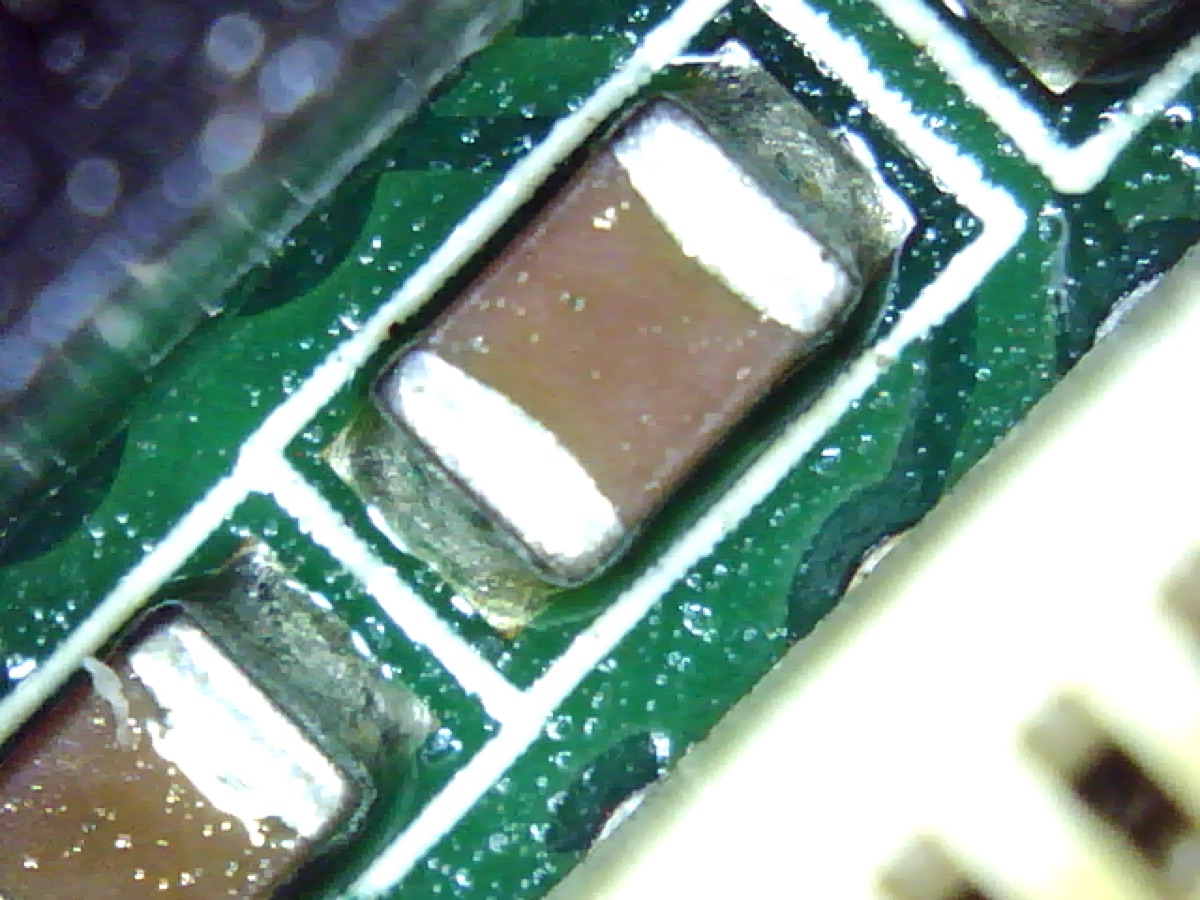
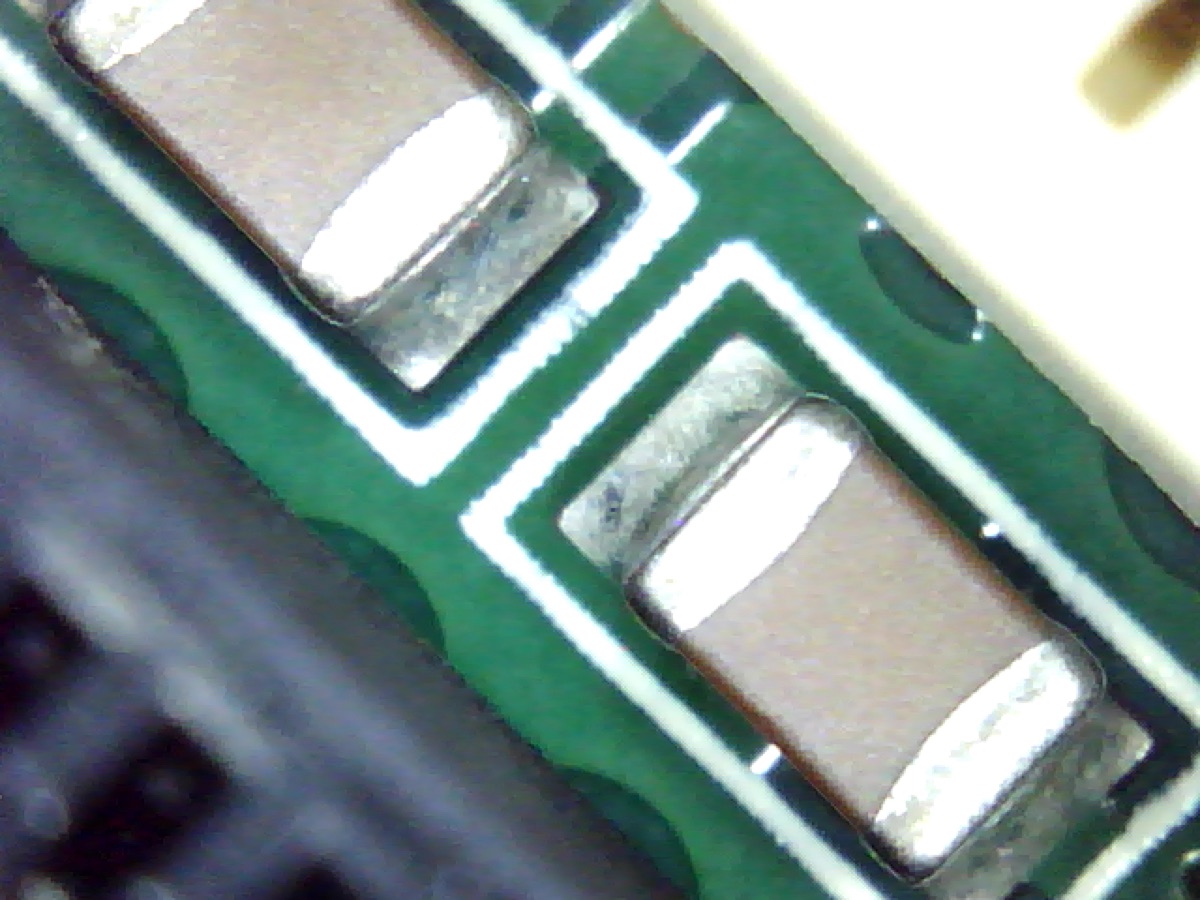
Before and after: what clean actually looks like
The difference between an uncleaned and a cleaned board is easiest to judge visually on the pads and around passive components.
Worked example: SME-6300 in-line PCBA cleaning machine
To make "what and when" concrete, here are the key specifications of the Southern Machinery SME-6300, an in-line machine built for mass production cleaning of rosin, no-clean and water-soluble flux residue. All figures below are taken from the SME-6300 product datasheet.
| Item | Specification |
|---|---|
| PCBA max size | 500 × 400 mm (W × L) |
| PCBA min size | 50 × 50 mm |
| Max PCBA thickness (with components) | 100 mm |
| Conveyor net width | 500 mm |
| Conveyor speed | 0.1 – 1.5 m/min |
| Wash liquid temperature | Room temp – 80 °C |
| DI water rinse temperature | Room temp – 60 °C |
| Hot air dry temperature | Room temp – 100 °C |
| DI water resistivity | 0 – 18 MΩ |
| Clean tank capacity | 280 L |
| Pre-rinse tank capacity | 60 L |
| Rinse tank capacity | 40 L |
| Liquid filter | 1 µm |
| Machine size (L × W × H) | 5200 × 1650 × 1650 mm |
| Machine weight | 2800 kg |
The SME-6300 is targeted at exactly the high-reliability segments listed above: car, military, aerospace, telecom, medical device and digital-meter PCBA.
See it running
Two short clips show the process in a Smart EMS factory line:
Bottom line
If your boards carry rosin or, especially, water-soluble flux, or if they serve automotive, military, aerospace, telecom or medical applications, plan a defined cleaning step after wave soldering rather than trusting "no-clean". Match the cleaning method to the flux chemistry and the reliability class, verify with a clean visual and a controlled DI rinse, and you will remove the residue before it becomes a field failure.